Common faults and solutions of power cables
Common faults and solutions of power cables
- 3678
- 3
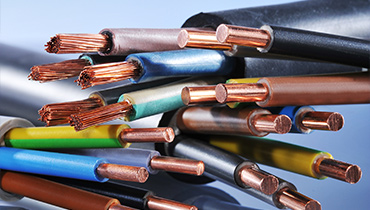
Common faults of power cables mainly include low-resistance grounding/short circuit, high-resistance grounding, disconnection, disconnection and grounding, and flashover faults.
Fault type judgment:
Use an insulation resistance meter to measure the insulation resistance of each phase to make a preliminary judgment:
(1) Resistance less than 100 kiloohms: low resistance grounding or short circuit fault.
(2) The resistance is higher than 100 kiloohms but significantly lower: high resistance ground fault.
(3) The insulation resistance is normal but the conductor is discontinuous: disconnection fault.
(4) The conductor is discontinuous and grounded through a resistor: disconnection and ground fault.
(5) Repeated breakdown in the preventive withstand voltage test: flashover failure, most common in terminals and joints.
Fault test method:
At present, the flash test method is commonly used, especially the flash test method which is easy to operate and has high accuracy. The fault point is forced to discharge through high voltage device, and the current pulse meter receives the signal and measures the distance.
(1) Low-resistance fault (resistance <100 kiloohms) or open circuit is often measured directly using the low-voltage pulse method.
(2) For high-resistance faults (resistance >100 kiloohms) and flashover faults, the flash flash method and the direct flash method are used to locate them respectively.
With the advancement of technology, equipment such as smart cable fault testers are now widely used, which can control the error within tens of centimeters, achieve rapid and precise location of fault points, and greatly improve the efficiency of maintenance.
